How to Build a Digital Family Archive
You do not need to organize your entire family history before you begin. The easiest way to build an archive is to start small, preserve what you know, and add connections over time.
Step-by-step guide
Decide Where to Start
Choose one manageable starting point:
- one person,
- one branch of the family,
- one box of photographs,
- one family album,
- one event,
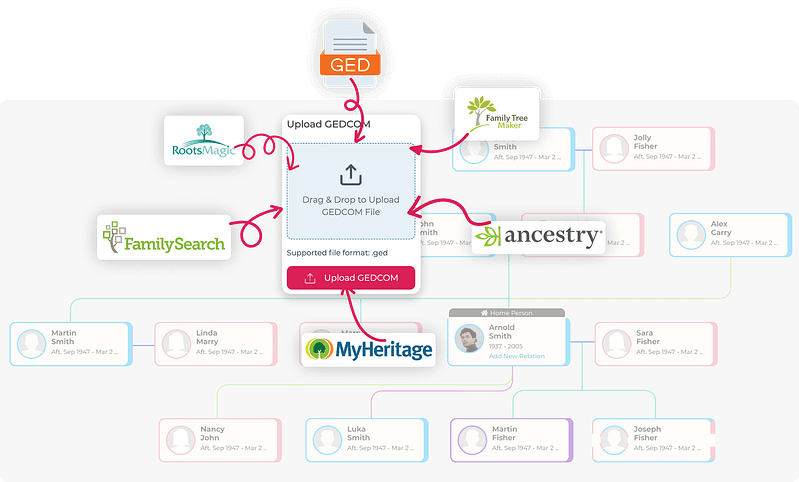
- or one existing genealogy file.
Trying to organize everything at once is one of the fastest ways to make a preservation project feel impossible.
Gather What You Already Have
- phones,
- computers,
- cloud accounts,
- external drives,
- photo albums,
- boxes,
- relatives' collections,
- genealogy programs.
At this stage, the goal is not perfection.
The goal is knowing what exists.
Start With People
People provide one of the most useful organizing structures for an archive.
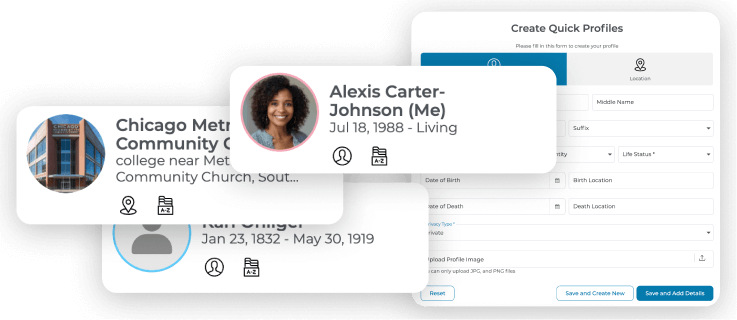
Create profiles for people you know and begin attaching information to them.
Record what you know now. Details can always be expanded later.
Bring In Photographs and Documents
Add digital images, scanned photographs and important documents.
Do not worry about completing every description immediately.
Preserve the file first. Then begin adding context.
Identify Who, Where and When
Who?
Who appears in it?
Where?
Where was it created?
When?
What date or approximate time period?
What?
What is happening?
Why?
Why does this matter?
This is where an archive becomes far more useful than a folder of files.
Add Stories
Facts tell part of the story.
Memories explain what those facts meant.
- captions,
- written stories,
- audio memories,
- interviews,
- family traditions,
- anecdotes.