
What genealogy documents
One of the most challenging things about researching your family history is that there are so many locations to look for it! Do you feel like you have information spread out over multiple sites? Are you wanting to add all of that research to the information you have in your personal collections? So were we, and we’re here to help!
Archoral is built specifically to help you blend and curate your genealogy and family history in one spot, providing you with easy to view charts and timelines!
This week we’ll explore the differences and benefits of both kinds of research as well as give you some resources and guidance.
What family history adds
Genealogy and family history are closely related but differ in focus and scope. When you combine both, you find new places to look for information, new stories to add, and enrich the overall view of your family’s history.
Here’s a breakdown of each:
Genealogy is the study of lineage and ancestry.


Genealogy is fact-based, using official documents. Its focus is on tracing the direct lines of descents from one generation to the next, often with an emphasis on collecting dates, names, places, and relationships. Genealogists typically work with birth, marriage, and death records, seeking to establish proof of connections between ancestors.
Example Activities in Genealogy:
- Searching for official documents (birth certificates, census records)
- Proving relation to historical events
- Proving ancestral relations through ethnicity
Family History goes beyond the bare facts of genealogy by exploring ancestors' lives, stories, and experiences.


Family History is story-based, focusing on life details. It seeks to bring family members’ personalities, social environments, and life events to life by using personal stories, journals, photos, and other contextual records. Family historians may look into things like family traditions, cultural background, and even the impact of historical events on their ancestors’ lives.
Example Activities in Family History:
- Gathering family stories, photos, and heirlooms
- Researching the historical context of an ancestor’s life
- Researching employment, organization, and religious memberships

Where the two approaches overlap
Archoral is a media-based application that encourages you to combine your factual genealogical research with the textures provided by your family history.
Using genealogical research sites provides you with linkage documents to verify the names and dates in your family tree, but your ancestors don’t begin to come alive until you start combining your scattered collections, adding context to their day-to-day lives.
This is where Archoral comes into play. We are the first system that curates a wide variety of information, taking your scattered research and collections and combining them with memories and stories in one comprehensive location.
- Genealogical research documents
- Connections made from DNA tests
- Family photos, videos, journals, and heirlooms
- Stories and memories
Collecting these different types of information rarely happens in timeline order. With Archoral, you index information for each media piece as you discover it. Our unique system then organizes it for you, providing profiles and timelines for each family member. We don’t stop there! Social surroundings and activities provide a wider view of your ancestors’ lives. By adding stories about friends, neighbors, associates, hobbies, employment, military service, and so much more, your relative’s worlds begin to take shape, and new, relatable stories emerge!
Why stories and context matter
You don’t have to know everything now! Start with the pieces you do know and watch your ancestors’ world grow.
You also don’t need to know all the generational connections needed to build families!
Family tree applications require you to build a family by placing relationships and generations in order. To place great-grandparents, you must first place the grandparents. To place children, you must first place at least one parent.
Archoral’s process allows you to create relationships between people in any order that you’d like.
Let’s take a look at this scenario:
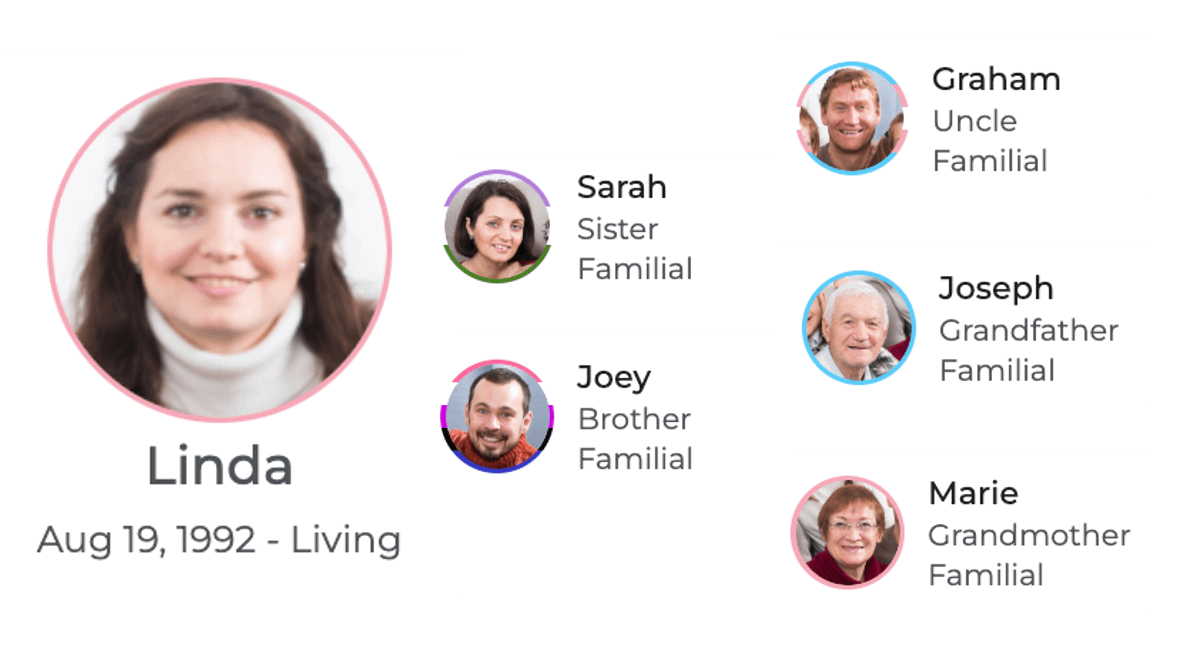
You know that Linda, Joey, and Sarah are siblings
You also know their uncle is Graham, and their grandparents are Joseph and Marie.
The missing piece is the parent who connects them to Graham and the grandparents
Standard Family Tree Programs
Without a parent for the children, you cannot add the uncle or the grandparents.
You must have that connecting piece to continue building out the relationships.

Archoral’s Relationship Builder
Add relationships between two people without concerning yourself with the connective links. Store and view your research as you gather it, make connections as they become available.
Archoral even allows for Friends, Associates, Neighbors as well as Adoptive, Foster, Guardianship and many more!
How a digital family archive supports both
Here are some ideas to get you started!
Genealogy Resources
These are some of the most popular genealogy sites. Valuable information can be found in all of them, as they each offer different digitized collections.
Bring your findings into your Archoral Archive and watch them blend with your family history and come to life!
- Ancestry.com
- One of the largest genealogy websites, with access to billions of records worldwide.
- Offers access to census, military, birth, and death records, and connecting with DNA matches.
- FamilySearch
- Provides access to a vast collection of records. Its global focus includes many records from outside the U.S.
- MyHeritage
- Known for its large international database, MyHeritage offers DNA testing and family tree-building tools.
- Useful for finding records, family photos, and connecting with relatives worldwide.
- Findmypast
- Specializes in UK and Irish records, making it valuable for those with British and Irish ancestry.
- Contains unique collections such as parish records and newspaper archives.
- GenealogyBank
- Focuses on historical newspapers, obituaries, and other records for U.S. genealogy.
- Useful for finding detailed information about ancestors’ lives and family connections.
- American Ancestors (by the New England Historic Genealogical Society)
- Offers access to New England and early American records, including family trees and historical documents.
- Great for those with early American ancestors or specific New England lineage.
- WikiTree
- A free, collaborative family tree website that aims to create one global family tree.
- Allows users to collaborate and verify information on shared ancestors.
- Geni
- Known for its collaborative family tree, Geni allows users to connect with other members to build a large, global tree.
- It also has a DNA testing integration for genetic genealogy research.
These sites each offer different strengths, so exploring multiple sources often provides a fuller picture of your genealogy.
For another useful comparison, read Family Tree vs. Family Archive.
Family History Sources
Researching family history goes beyond collecting names and dates—it involves piecing together stories, cultural context, and personal details that bring ancestors’ lives to life. Here are some effective methods for delving into family history:
- Interview Family Members
- Upload video and audio recordings to Archoral to preserve and connect the stories!
- Start with the people closest to you! Speak with older relatives to capture stories, traditions, and memories that may not be recorded anywhere else.
- Ask open-ended questions about family stories, daily life, family traditions, important life events, and any known ancestors.
- Gather Family Documents and Photos
- Digitize and upload to Archoral for more accessibility and connectivity!
- Transcribe and index old letters, diaries, scrapbooks, photo albums, and family Bibles, which often contain details that bring personal stories to life.
- Analyze these items for clues about family relationships, important places, and social context.
- Research Local Histories and Newspapers
- Phone scan or ask for digital copies to add to your Archoral Archive!
- Local history books and historical newspapers provide context for your ancestors’ lives, including community events, business advertisements, social clubs, and important historical moments.
- Online databases like *Newspapers.com*, *GenealogyBank*, and *Chronicling America* often have searchable archives of old newspapers.
- Visit Ancestral Hometowns and Cemeteries
- Take photos of where your ancestors lived, worked, and went to school to add to your Archoral Location Profiles.
- Visiting places where your ancestors lived can provide a deep sense of connection and insight into their daily lives.
- Cemeteries often provide valuable information about family relationships and cultural or religious ties.
- Check local archives, libraries, and historical societies for resources that may not be available online, like property records, old maps, or personal collections.
- Research Historical Context
- Archoral holds specialized places for historical and social events, adding to the story of your ancestors’ lives.
- Understanding the time period your ancestors lived in can illuminate why they made certain life choices, such as migration, marriage, or career decisions.
- Read about the historical events, social norms, and economic conditions of the time. Resources like the *Library of Congress* and *Digital Public Library of America* offer access to a wealth of historical materials.
- Explore Military, Immigration, and Naturalization Records
- Archoral recognizes the importance of military service on one’s life. We have specialized sections for military service as well as travel and transport to capture all of your family’s movements.
- Military records (such as service, draft, or pension records) can reveal details about an ancestor’s service, rank, and even physical description.
- Immigration and naturalization records often include origins, travel routes, and sometimes reasons for emigration. Sites like *Ellis Island*, *Ancestry.com*, and *FamilySearch* often have these records.
- Examine Cultural and Religious Sources
- Archoral encourages a more detailed look into your ancestors culture with locations, events, attendees and positions held within each organization.
- Religious institutions like churches, synagogues, and mosques often kept records of births, marriages, and deaths.
- Cultural societies or ethnic archives can also provide unique resources and insights, especially if your family comes from a specific cultural background (e.g., Irish, Italian, Jewish).
- Document Family Traditions and Heirlooms
- We love traditions and heirlooms! With Archoral’s ability to record and transcribe audio against photos of items, these stories will be saved and shared for generations to come!
- Record the origins of family traditions, holidays, or recipes, as well as any stories behind family heirlooms.
- Ask about items with sentimental value (such as quilts, jewelry, or furniture) to understand how they’ve been passed down and what they meant to previous generations.