

Art is an overlooked part of your family history research! In this article, I share what can be discovered, along with tips and links for my process of Archiving Artwork.
What kind of artwork is this guide good for?
The importance of art isn’t reserved just for Monet’s and Picasso’s.
Children’s art is a very important time capsule into their growth. It shows what they felt was important in the world, their state of mind, their surroundings. It’s amazing what you can discover about a child through their art!
Personal art is a piece of someone’s soul. The subjects, the medium used, their creative environment. Were they gifted, sold, hidden away?
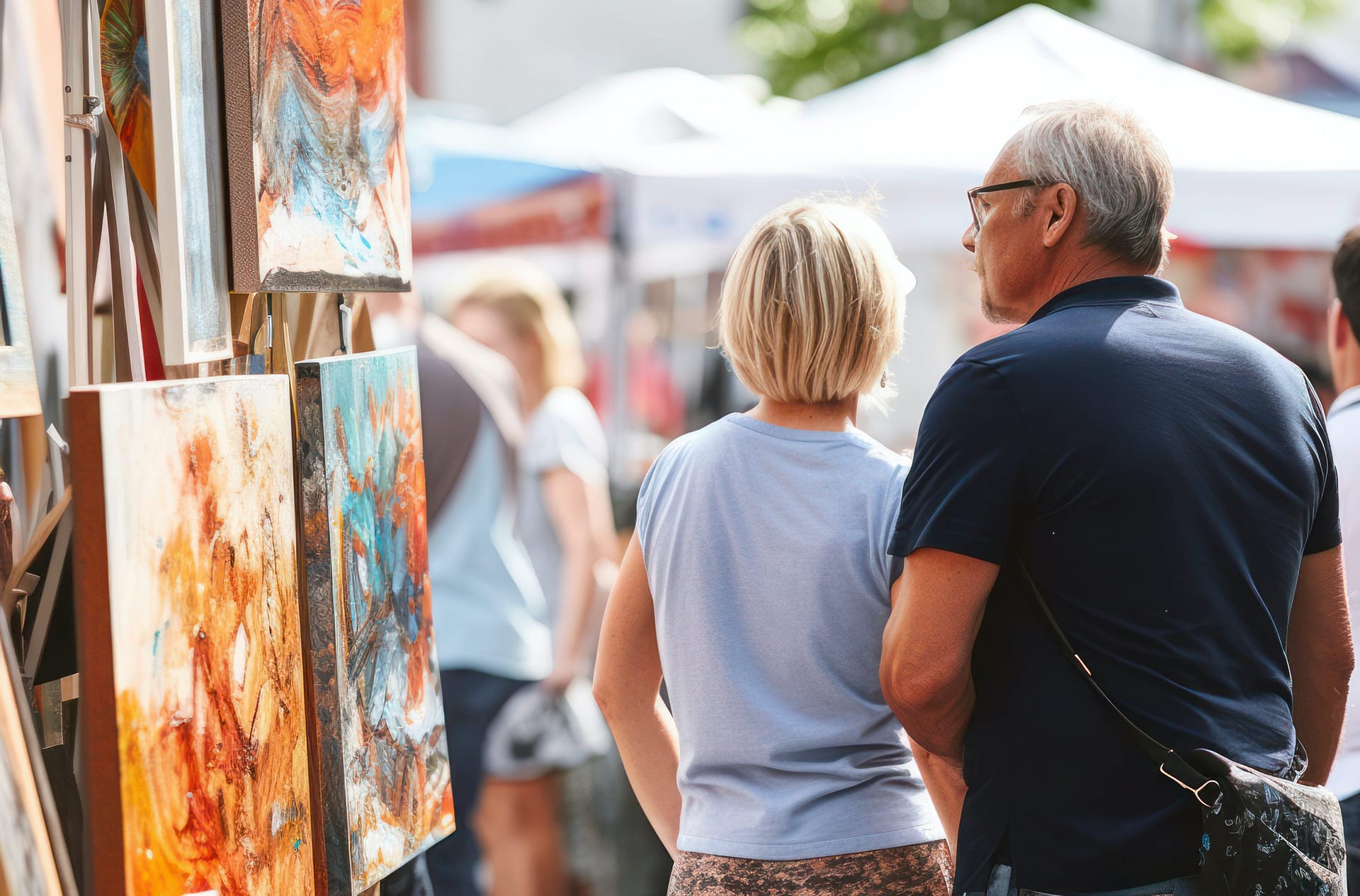
Art Collections, again, this is not just about galleries; it’s about telling the when, how, and why of the pieces each member of your family chose to hang in their homes and offices. Art has a very personal connection to its owner; there’s a lot that can be discovered here!
Portraits, depending on their age, can give clues to the affluence level of the person who commissioned them and the significance of the subject.
Every piece that’s hanging on your wall, your grandparents’ wall, or even stored in the attic tells a story and that story is composed of clues.
Location: Whether it’s the content of the image or markings from a studio or gallery, they both provide clues to travel patterns.
Time Period: The style of the artwork or type of photograph is indicative of a time period. The look of clothing, hair, and vehicles are all time markers too.
Context: This is not just the subject of the piece but the reason for it’s purchase or creation. Does it commemorate a special event or memory? What is the reason it ended up being part of your ancestor’s collection?
Resource: One of my favorite books to help guide you in uncovering these clues is The Photo Detective by Maureen A. Taylor. While this book focuses on finding clues within photographs, these practices can be used for anything in your collection, artwork or otherwise.
How does Archoral help in this journey?
Information is generally scattered, discovered, and digitized at random points in time. Archoral’s ability to make multimedia connections, along with the use of our extensive indexing tool, helps put that lineage back together. By adding dates and indexed information to each piece of media you upload, we automatically organize your information into a timeline. As the lives of each piece come to light, so can the journey of your ancestors.
- Discover the provenance of ownership
- Think of finding a photo of a painting you have, hanging in your great grandmother’s house… it’s in the background, but there it is!
- That not only shows ownership but can also help give you a date range for it’s potential creation!
- Connect any documentation you may have
- Purchase documents, insurance appraisals, restoration receipts, gallery exhibit sheets
- These are all samples of documentation you can connect to tell the object’s life story
My process for digitizing artwork:
A little advice to start
- Find your frame, then zoom out
- You never know how you may want to crop it for later use
- Give yourself some breathing room
- Take lots of different angles
- Even the slightest adjustment can change the lighting, shadows, or content of the frame
- It’s digital!
- Shoot! Shoot! Shoot!
- When looking at my images in LightRoom, I often find that the one I thought was the winner, actually isn’t!
- Work with what you’ve got
- When I digitize 3-dimensional items for people on site, I rarely have an ideal location or set-up.
- Success is working with what you have, again, it’s digital – fixes are easy
- At the end of this post I have a list of the simple items I can pack in a suitcase and they haven’t let me down yet!
- It’s not the camera…
- Today there are so many different resources for digital photography, you don’t need a professional camera, smart phones take amazing images!
List of shots to get
- Full frame shot
- Details within the artwork
- Signature of Artist
- Texture of medium used
- Frame or canvas edging
- Back of the artwork
- Labels or markings
There are some key areas that you need to focus on when archiving artwork of any kind. It doesn’t really matter if you are doing this for insurance reasons, sale, or just personal record keeping.
By following the recommended list of shots, all information about each piece will be preserved. If the piece was ever lost or damaged, it’s history can live on.
An example shoot for an Art Collector
I was recently contacted by an art collector whose employment took her around the globe. On these travels, she acquired some impressive pieces and met a myriad of amazing people. What had started as a hobby quickly grew into a passion.
She was interested in archiving her collection, not only as a record of the work, but a record of the journey that had become a big part of her story!
How could I refuse such an interesting endeavor? So I packed a suitcase and got on an airplane!
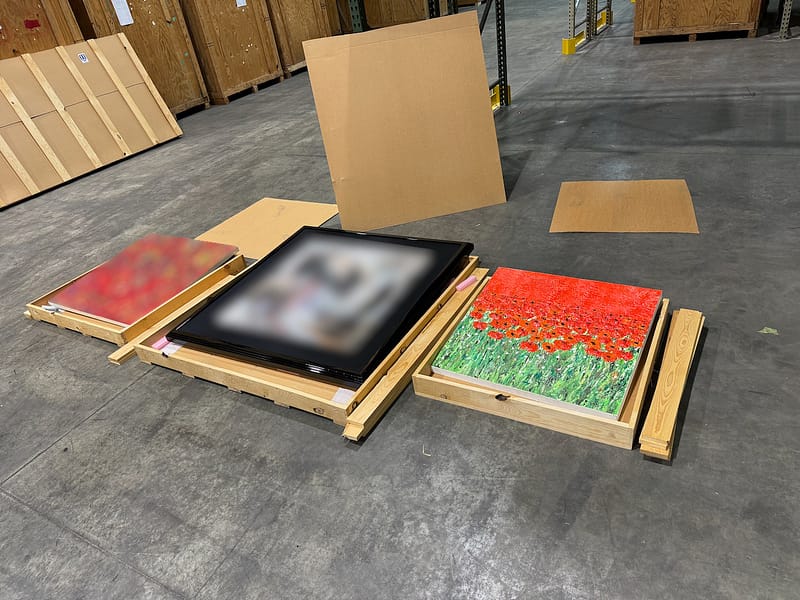
As some of the advice I gave above was to “work with what you’ve got”, a portion of her collection was crated and stored at a facility. I found that they had no proper space for displaying, much less photographing the pieces. Thankfully, they had been taken out of the storage vaults and opened; now it was up to me to get the job done!
With the uniqueness of this situation, I thought it would be a great example to use.
The most beautiful Red Poppies!
I have chosen to share my journey with this piece because not only was it breathtaking to hold, but it was also in the least ideal environment for a photoshoot!
As one would think, a warehouse dock is not the ideal place to photograph such a high end collection, but you work with what you’ve got!
This shot was taken at the beginning of the visit, while I was trying to figure out how to make this work! I took some crates that hold sculptures and gently placed them against the wall to raise the paintings off the ground.
Thankfully the lighting in the warehouse was round LED’s so I had crisp white lighting to work with, not the yellow that can come from fluorescents.
The painting that I’m working with in that photo had glass, so I was getting the “little white dots” from the fixtures reflecting on the piece. I was able to put one of my small diffusion panels on a stand to block them.
I use a tripod to hold my camera during setup, so I don’t ever put it on the floor. For the actual shoot, a quick release latch on the tirpod allows me to easily remove the camera and take pictures freestyle.
The Results!
Photographing the signature with a frame edge helps show placement, especially in a piece with this much activity. Images of the edges show the depth of the paint medium.
A photo of the back of the painting shows the stretcher frame and the way the canvas is mounted. This shows both the time frame of the mount and whether or not it is the original frame. In this case, I’m not sure the relevance of the markings, but I included them just in case.
The next steps:
After I deliver the results, she will upload them to Archoral, and create profiles for each piece.
She is currently undergoing the process of digitizing bills of sale, crating, shipping, and customs receipts. Along with artist bios, gallery sheets, and any other information she finds.
As she uploads each document and connects them to the right piece, the story will begin to take shape.
She will also be able to go through photos of each of her residences, linking any images of the pieces as she had them hung.
This may sound like a daunting task but Archoral was built for this and we make it not only easy but fun!
Some other examples:
I have several pieces from the different family branches in my personal archives. I wanted to get them into Archoral as quickly as possible so they could tell me stories about them. I took these images with an iPhone, and they work great! When I have time, I’ll photograph them better, but the point is to archive them and start learning as soon as possible!
My Travel Gear
When all I have is a suitcase, this is my bare minimum gear, and it has served me well on many occasions!

Cannon EOS 5d Mark iv
Don't be fooled by the massive kits that are sold. I only carry the camera body, a 75-300 mm lens, a vertical grip, two batteries, spare memory cards, and a carry strap.

Canon 50mm Macro Lens
This has proven to be an invaluable investment! Perfect for detail shots and informational markings.

Quick Release Plate
Best invention ever! Moving on and off the tripod is so easy! The plate doesn't add any weight or get in the way. It's on my camera 24/7, no matter what I'm doing.

Manfrotto Tripod with Ball Head
My favorite tripod brand! Lightweight aluminum, easy adjustments, and the ball head is a must, no matter what you're shooting!

Collapsible Diffuser
This set is great because you have one panel with several different cover options. You can find these in a multitude of sizes. I use the translucent panel the most to block light reflections

Portable Tripods
These are perfect for holding lightweight items like diffusion panels. They extend to a good height and fit well in a suitcase!

Reflector Clamps
These fit the tripods listed and are surprisingly strong! I like the manuverability of the clamps to hold the reflectors in whichever position I need.
Other items I carry:
- Power Strip
- 4 outlet minimum
- 2 USB Ports
- Extension Cord
- 6′ minimum
- Medium Duty
- Memory Card Reader
- Multiple size card slots
* All links provided in this article are strictly informational. We are not affiliates of any represented businesses and receive no funds from purchases.
October is Family History Month
To celebrate Family History Month, we will be providing tips on archiving your family’s photos and artifacts.
Sign up for our weekly newsletter to stay informed about up coming posts!
Every piece of memorabilia has a story behind it, and that story directly connects to a personality.
Read on to learn how the Archoral indexer makes all your hard work worth it!

